Chapter 5: A Better Kind of Neighbor
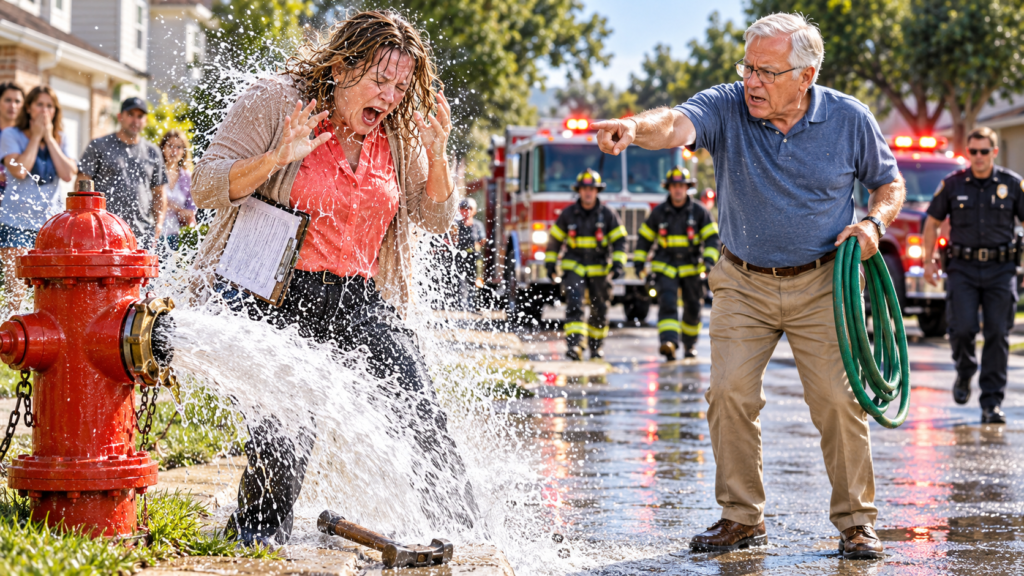
In the weeks that followed, Karen faced the legal and financial consequences of damaging the hydrant.
She paid for the repairs and accepted the penalties that followed.
Eventually, she stepped away from her role on the HOA board.
Some neighbors expected her to leave Willow Creek entirely.
She didn’t.
For a while, she kept to herself.
Then, gradually, things began to change.
Karen started attending community meetings again, this time sitting among the residents instead of standing over them with a clipboard.
She listened more than she spoke.
When disagreements came up, she stopped treating every problem as a violation.
And when someone suggested replacing an old neighborhood fixture because it looked unattractive, Karen was the first to ask whether it served an important purpose.
Frank noticed the change but never made a big deal of it.
One afternoon, months after the hydrant incident, he saw Karen walking past his house.
She stopped.
For a moment, neither of them said anything.
Then she looked toward the red hydrant at the curb.
It had been repaired and repainted. It stood exactly where it had always stood.
Karen gave a small, embarrassed smile.
Frank returned it.
No grand apology was necessary.
Some lessons are better demonstrated than explained.
Frank eventually returned to his quiet routines — gardening, reading, and talking with neighbors.
He never sought credit for what happened.
But he was glad the incident had brought the community closer together.
Willow Creek became a kinder, more connected neighborhood, with a renewed appreciation for respect, common sense, and the value of looking out for one another.
The residents learned that a community isn’t made stronger by having the strictest rules.
It becomes stronger when people understand that everyone who lives there matters.
Sometimes the most important lesson doesn’t come from a meeting, a fine, or a courtroom.
Sometimes it comes from a red fire hydrant, a fallen hammer, and one unforgettable wall of water.
Respect isn’t about control. It’s about understanding that we all share this place, and we all count.