Chapter 1: The Seat She Claimed
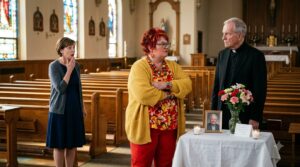
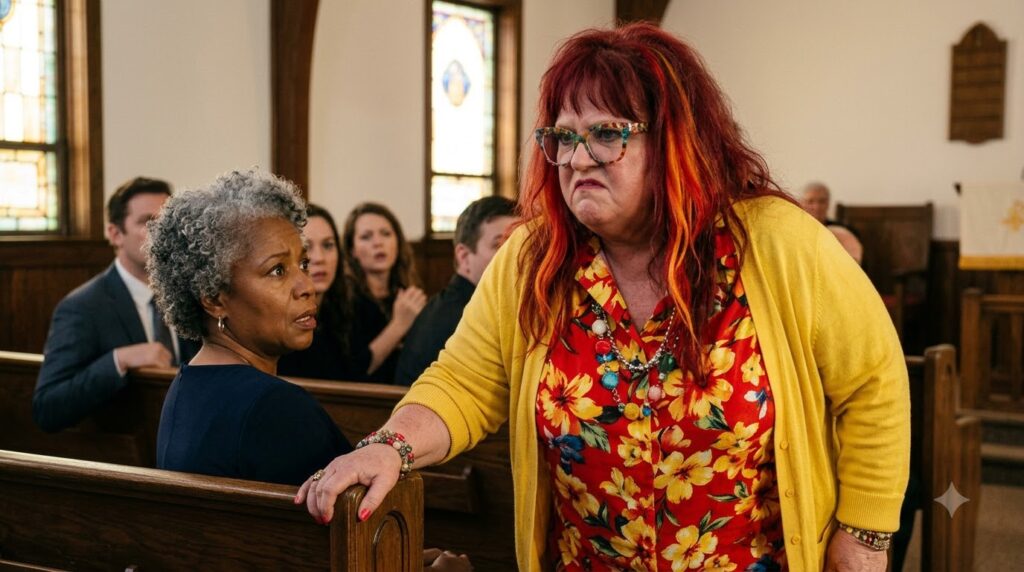
Denise Harper was already pulling at the front-row pew when the woman sitting there turned around in disbelief.
“Get out of that seat,” Denise said sharply. “I said it was mine.”
The wooden pew scraped against the floor.
The sound seemed painfully loud inside the quiet church.
A few mourners turned their heads. Others stared down at their programs, suddenly uncomfortable with the confrontation unfolding only a few feet from the memorial table.
The woman in the seat, Margaret Whitaker, remained still.
She wore a navy cardigan over a cream blouse, and her hands were folded tightly in her lap. She had been sitting there quietly, looking toward the framed photograph of her husband, Thomas, surrounded by flowers and candles.
“This is a memorial service,” Margaret said.
Denise’s expression hardened.
“I know what it is.”
“Then please understand that this seat is reserved for the family.”
Denise looked at the pew as though Margaret had made an unreasonable demand.
“I got here first,” she said.
Margaret glanced toward the photograph.
Then back at Denise.
“You’re asking me to leave my husband’s seat.”
Denise’s irritation briefly faltered, but only briefly.
“I need to see better,” she said. “I can’t sit in the back.”
The explanation did not soften the room.
Margaret slowly rose.
The movement was quiet, but it carried more weight than Denise seemed to understand.
An elderly priest standing near the memorial table watched her.
So did everyone else.
Margaret’s eyes had become glossy, but she refused to make a scene.
That restraint made Denise’s behavior look even harsher.
Father Michael stepped forward.
“Ma’am,” he said calmly, “that seat is for Thomas’s family.”
Denise folded her arms.
“But I got here first.”
Margaret looked directly at her.
“That was my husband.”
The words landed.
Denise glanced at the framed photograph for the first time.
Thomas was smiling in the picture.
He looked older than the man Denise remembered, but unmistakably kind.
For one second, she seemed to realize what she had done.
Then pride returned.
“Then you should have saved me a seat,” she said.
A stunned silence followed.
Father Michael’s expression changed from concern to firm authority.
“This is not about who arrived first.”
He pointed toward an empty chair several rows back.
“Please sit there.”
Denise stared at him.
“I don’t understand why everyone is making such a big deal out of one chair.”
“No one is making a big deal out of the chair,” Father Michael replied. “We are protecting the dignity of the family.”
Denise looked around.
For the first time, she noticed that nearly every person in the front half of the church was watching her.
Not admiring her determination.
Not agreeing with her.
Waiting to see whether she would make the situation worse.
The choice was suddenly hers.
She could walk to the back and let the service continue.
Or she could keep fighting over a seat that had never belonged to her.
Denise pointed toward the pew one more time.
“But I got here first.”
Father Michael did not argue.
He simply waited.
And the memorial service could not properly begin until Denise decided what mattered more—being right about the arrival order, or allowing a grieving woman to sit beside her husband’s photograph.