
Chapter 7: The Door
Two weeks later, Marcus boarded the same route again.
The afternoon was ordinary.
A mother pushed a stroller toward the rear door.
A teenager stepped aside for an older passenger.
A man with groceries waited patiently.
Then the bus stopped.
Marcus approached the accessible entrance.
The ramp unfolded.
No argument.
No phone cameras.
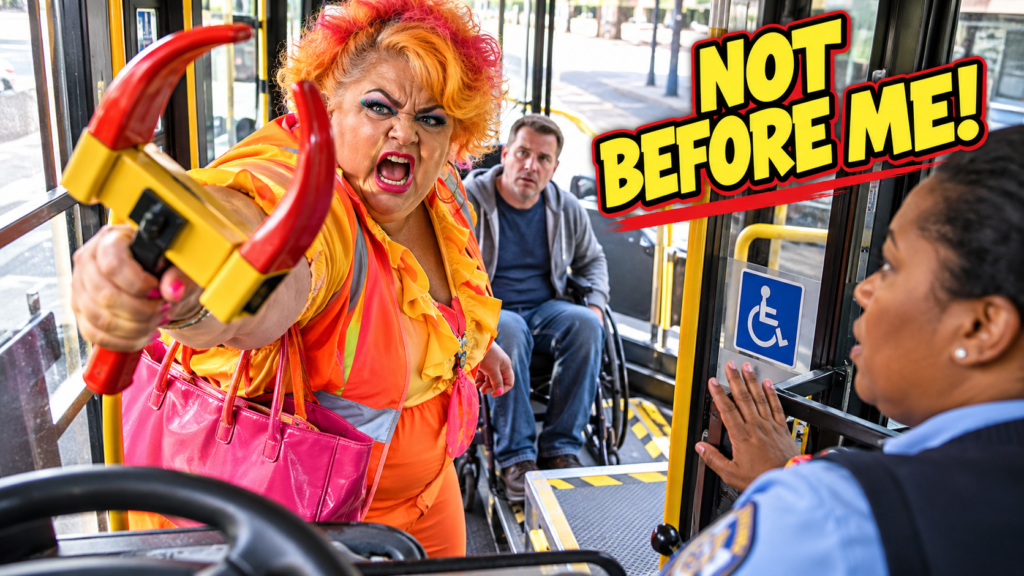
No fake lock.
Just the familiar mechanical hum.
Denise recognized him.
“Good afternoon.”
“Good afternoon.”
Marcus rolled aboard.
This time, another passenger moved aside before Denise had to ask.
It was a small thing.
Almost invisible.
But Marcus noticed.
He positioned his chair safely.
The ramp folded back into place.
The doors closed.
The bus moved forward.
A few stops later, Denise saw Patricia waiting at a corner.
For one second, neither woman nor driver moved.
Then Patricia boarded.
She stood behind the yellow line.
She glanced toward Marcus.
Her expression was uncomfortable.
Marcus noticed her.
He waited.
Patricia looked away.
Then, quietly, she stepped farther back to leave the accessible space clear.
Marcus nodded once.
No apology came.
None was required for that moment.
The bus continued down the avenue.
Denise kept both hands on the wheel.
The city moved beyond the windshield—storefronts, traffic lights, apartment buildings, people carrying groceries and briefcases and coffee cups.
Ordinary lives crossing paths for a few minutes before separating again.
Marcus looked through the window.
He thought about the red-and-yellow lock.
It had been plastic.
It had never held anything in place.
But for a few days, it had revealed something real: how quickly dignity could be treated like an obstacle when someone believed fairness meant everyone had to struggle in exactly the same way.
The bus stopped again.
The doors opened.
This time, everyone waited for the ramp.
No one complained.
No one demanded to know why it took longer.
The ramp reached the sidewalk.
Marcus rolled forward.
And the door remained open until he was safely through it.








